

Hair Care
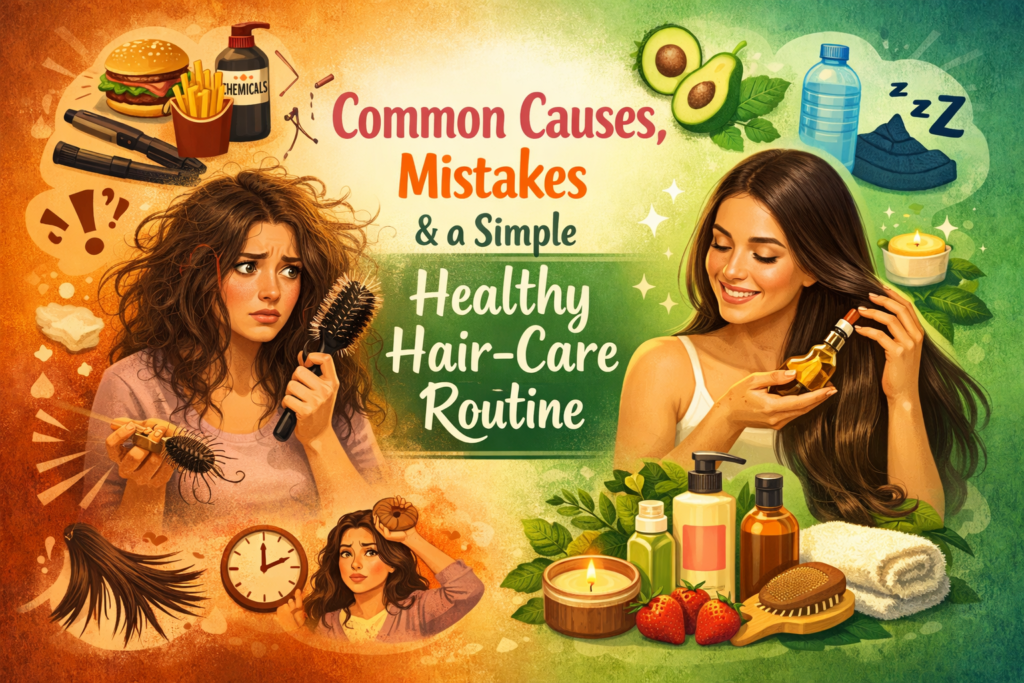
Common Causes, Mistakes & a Simple Healthy Hair-Care Routine Common Causes, Mistakes & a Simple Healthy Hair-Care Routine
Jan
Hair fall is one of the most common concerns today—across both men and women. The good news is: not all hair fall is abnormal. Losing some hair daily is natural, but when shedding increases noticeably, hair starts thinning, or your scalp becomes more visible, it’s time to understand what’s happening and fix the root cause.
This blog is written only for customer knowledge and awareness—no product recommendations.
1) How Much Hair Fall Is “Normal”?
On average, it’s normal to lose around 50–100 hairs a day. This can increase slightly during:
- Seasonal changes
- High stress periods
- Illness or fever recovery
- Postpartum phase (after pregnancy)
Hair fall becomes a concern if you notice:
- Sudden heavy shedding for weeks
- Visible thinning near the parting or crown
- Hair coming out in clumps
- Bald patches
- Itchy, painful, or flaky scalp with hair loss
2) The Most Common Causes of Hair Fall
Hair fall usually has multiple causes working together. Here are the most common ones:
A) Stress & Poor Sleep
Stress disrupts the hair growth cycle and can push more hair into the “shedding phase.”
Signs:
- Increased hair fall during stressful months
- Unexplained thinning
- Poor sleep quality
B) Nutritional Deficiency
Your hair needs protein, iron, zinc, vitamin D, B12, and healthy fats to grow properly.
Common triggers:
- Low-protein diet
- Crash dieting / skipping meals
- Long-term junk food habits
C) Hormonal Imbalance
Hormonal shifts can affect hair density and growth.
Examples:
- Thyroid imbalance
- PCOS (especially in women)
- Postpartum changes
D) Dandruff, Sebum Build-up & Scalp Issues
A healthy scalp supports healthy hair. When the scalp is inflamed or clogged, it can cause:
- Weak roots
- Increased breakage
- More shedding
E) Hard Water & Pollution
Hard water can make hair:
- Rough and dry
- Frizzy
- More prone to breakage
and it can leave deposits on the scalp over time.
F) Heat Styling, Chemical Treatments & Tight Hairstyles
Frequent straightening, curling, bleaching, coloring, and tight ponytails can damage hair strands and roots.
This often leads to:
- Hair breakage (looks like hair fall)
- Split ends
- Weak hair texture
G) Genetics (Hereditary Hair Thinning)
If hair thinning runs in your family, it can gradually appear with age.
Clues:
- Thinning near the crown/temple area
- Gradual volume loss over months/years
3) Hair Fall vs Hair Breakage: Know the Difference
Many people confuse hair fall with hair breakage. They are not the same.
Hair Fall (from the root)
- Hair comes out with a small white bulb at the end
- Often linked to scalp, hormones, stress, nutrition
Hair Breakage (from the shaft)
- Hair breaks mid-length
- No bulb at the end
- Usually due to dryness, heat, chemicals, rough handling
Knowing the difference helps you take the right action.
4) Biggest Hair Care Mistakes That Increase Hair Fall
Here are the most common mistakes people make (often unknowingly):
❌ Over-washing or Under-washing
Too much washing can dry out hair, but too little washing can cause scalp build-up.
Balance is important.
❌ Using Very Hot Water
Hot water strips natural oils and makes hair weaker over time.
❌ Aggressive Towel Rubbing
Wet hair is fragile. Hard rubbing causes breakage.
Better approach:
- Gently press hair with a towel
- Let it air dry partially
❌ Combing Wet Hair Roughly
Combing wet hair with force can increase breakage and shedding.
❌ Skipping Scalp Cleaning
Using oil or hair products without proper cleansing can clog pores and worsen scalp issues.
❌ Stressing Over Every Strand
Constant worrying increases stress, which can further increase hair fall.
5) A Simple Healthy Hair Care Routine (Easy to Follow)
You don’t need a complicated routine. Consistency matters more than complexity.
Step 1: Wash Your Hair on a Schedule
Choose a schedule based on your scalp type:
- Oily scalp: 3 times a week
- Normal scalp: 2–3 times a week
- Dry scalp: 2 times a week
Step 2: Condition the Hair Length (Not the Scalp)
Conditioner is for your hair strands, not your roots.
Apply on:
- Mid-length to ends
Avoid:
- Scalp application (may cause build-up for some people)
Step 3: Gentle Drying
- Avoid rubbing
- Avoid intense heat drying daily
- Keep hair protected from dust/pollution
Step 4: Comb Smartly
- Use a wide-tooth comb
- Start from the ends, then move upward
- Avoid tight hairstyles daily
Step 5: Keep the Scalp Healthy
A healthy scalp is clean, balanced, and calm—without itchiness or heavy flaking.
If your scalp has:
- Persistent dandruff
- Redness or irritation
- Acne-like bumps
It may need medical attention.
6) Lifestyle Changes That Improve Hair Health
Hair health is strongly connected to lifestyle.
✅ Eat Balanced Meals
Include:
- Protein sources (eggs, lentils, fish, chicken, paneer)
- Iron-rich foods (spinach, beans)
- Healthy fats (nuts, seeds)
- Fruits and vegetables
✅ Sleep 7–8 Hours
Hair repair and growth depends on good sleep cycles.
✅ Stay Hydrated
Dehydration affects scalp condition and hair texture.
✅ Manage Stress
Try:
- Walking
- Light workouts
- Meditation
- Deep breathing
- Reducing screen time before bed
7) When to See a Doctor
You should consult a dermatologist if you notice:
- Hair fall continuing for more than 6–8 weeks
- Sudden thinning or bald patches
- Scalp pain, infection, or severe dandruff
- Hair fall after illness that doesn’t improve
- Signs of hormonal imbalance (irregular periods, weight changes, fatigue)
A doctor may suggest tests like:
- Vitamin D
- Iron/Ferritin
- Thyroid profile
- B12 levels
Final Thoughts
Hair fall is common, but it’s also manageable when you focus on the basics:
- scalp hygiene
- gentle hair care
- balanced nutrition
- better sleep
- reduced stress
Most importantly, don’t panic. Hair needs time to recover. With the right habits, improvement usually starts showing gradually over a few weeks.
